

CG Policy · 2025
In this section7 topics
Corporate Governance Policy
Has a Corporate Governance Policy
Yes
Policy Description
The Board of Directors recognizes the importance of good corporate governance, which is a key factor in promoting an efficient operational system for the company, forming the foundation for its success and sustainable growth. Therefore, the Board of Directors has established a corporate governance policy covering the following key principles:
Equitable and trustworthy treatment of stakeholders. The Board of Directors is committed to performing its duties to the best of its ability to maximize benefits for the organization, demonstrating leadership and effectively and efficiently controlling management operations, and preventing conflicts of interest.
The company has established a code of conduct for directors and employees to adhere to.
Transparent operations, verifiable through the establishment of internal control and audit systems to manage risks. Honor Audit and Advisory Co., Ltd. has been appointed by the company to perform internal audit duties. together with Head of Internal Audit to oversee the performance of the management to ensure it aligns with the company's policies efficiently.
The company is committed to the interests of all stakeholders, including shareholders, creditors, employees, customers, business partners, government agencies, competitors, and the general public, without solely focusing on profit. The company has documented its corporate governance policy and declared it as an important policy for the Board of Directors, management, and all employees at all levels to adhere to since January 13, 2003. All relevant parties can study and verify this policy on the company's website.
Level of understanding and application of good corporate governance principles
The Board of Directors recognizes the importance of good corporate governance principles and has therefore established a policy for disclosing important company-related information, both financial and non-financial, in accordance with the requirements of Office of the Securities and Exchange Commission and the Stock Exchange of Thailand, accurately, completely, timely, and transparently. Furthermore, it has continuously adhered to good corporate governance principles according to the criteria of the Corporate Governance Survey for listed companies, with the exception of certain policies that the company has implemented in alternative ways differing from the prescribed criteria, as considered by the Board of Directors regarding reasonableness and appropriate business operating environment, to achieve the company's goals and objectives and to consider the best interests of shareholders.
The Board of Directors will review matters that the company has not yet been able to implement in accordance with good corporate governance principles and has clearly defined policies and practices in the Corporate Governance and Business Ethics Manual, which can be downloaded at www.estarpcl.com. The company has strictly adhered to these, summarized into 5 categories as follows:
Category 1: Shareholder Rights
The company emphasizes upholding and promoting the fundamental rights of shareholders as investors in securities and owners of the company. These rights include receiving complete and sufficient company information, receiving a share of the company's profits, attending meetings to exercise voting rights for the appointment or removal of directors, and the appointment of auditors, among others.
The company stipulates that the Annual General Meeting of Shareholders must be held within 4 months from the end of the company's accounting period, to provide shareholders with the opportunity to be informed of the company's performance, express opinions, and participate in important decisions of the company. The company has held
Preparation for the company's Annual General Meeting of Shareholders, as follows:
Date of Operation | Details |
October 1, 2024 | The company announces the proposal of shareholder meeting agenda items, nominations for directorships, and submission of questions prior to the Annual General Meeting of Shareholders, by notifying through the Stock Exchange of Thailand's information dissemination system and publishing the procedures for such proposals on the company's website. Once the meeting has concluded its consideration of the agenda items notified before the shareholder meeting, the company also grants shareholders, whose combined shares amount to not less than one-third of the total issued shares, the right to propose other matters for consideration at the meeting, in addition to those specified in the notice of meeting, in accordance with the Public Limited Company Act B.E. 2535. |
February 28, 2025 | The Board of Directors resolved to approve the company's Annual General Meeting of Shareholders No. 1/2025 on April 28, 2025 |
March 17, 2025 | Record Date for Shareholders Entitled to Attend the Company's Annual General Meeting |
March 20, 2025 | Publish the complete notice of shareholder meeting, agenda, and all supporting documents in both Thai and English on the company's website www.estarpcl.com at least 28 days before the meeting date. |
March 27-29, 2025 | Advertisement of the notice of the company's Annual General Meeting of Shareholders No. 1/2025 published in Khao Hoon newspaper (Thai version) continuously for 3 days before the meeting. |
March 27, 2025 | The notice of meeting was sent to attendees in advance by mail at least 7 days before the meeting, which was carried out by |
April 28, 2025 | Annual General Meeting of Shareholders at 2:00 PM, conducted solely via electronic media. |
The company has prepared the complete notice of meeting for the year 2025 along with a clear agenda and all supporting documents in both Thai and English, to facilitate both Thai and foreign shareholders, ensuring completeness and sufficiency of information. For each agenda item proposed in the notice of meeting, the company states the facts and reasons, as well as the Board's opinion. For agenda items crucial for shareholders' decision-making, the company has specified them in the notice of the Annual General Meeting of Shareholders, such as the agenda for appointing directors and the agenda for appointing auditors, where names and profiles of proposed appointees are provided to help shareholders assess their qualifications and suitability, including the following important information:
Copies of the minutes of the previous Annual General Meeting of Shareholders for shareholders to consider and approve the minutes.
The company's annual report containing important information about the company and its performance over the past year.
Detailed information for consideration of all agenda items, such as the agenda for electing directors to replace those retiring by rotation, including a brief profile of each director, comprising age, education, past and present positions, number of shares held in the company, number of terms served in the company, positions in listed companies and other businesses that may lead to conflicts of interest with the company, and legal disputes.
Clarification of proxy methods, registration, presentation of meeting attendance documents, and voting.
Information on independent directors whom shareholders can consider appointing as proxies, with complete profiles.
Shareholder Meeting Attendance Procedures
Company regulations specifically related to shareholder meetings
All 3 types of proxy forms, as prescribed by the Department of Business Development, Ministry of Commerce: Form A is a general proxy form, which is simple and uncomplicated; Form B specifies various items in detail; and Form C is a proxy form used specifically when the shareholder is a foreign investor and appoints a custodian in Thailand to hold and manage the shares.
The company has established a guideline to provide shareholders with the opportunity to propose agenda items for shareholder meetings and nominate individuals for election as directors, by notifying through the news system of the Stock Exchange of Thailand 3 months prior to the end of the accounting period. The criteria and clear procedures are announced and published on the company's website www.estarpcl.com during October to January, starting from October to January each year informally until written consent is received from shareholders. The Company Secretary will initially screen proposals before presenting them to the Board of Directors for consideration of the necessity and appropriateness of the proposed agenda items. The Board of Directors' decision is final. Matters approved by the Board of Directors will be included in the meeting notice along with the Board's opinion. Matters rejected by the Board of Directors, according to the established criteria, will be informed at the shareholder meeting with reasons for the rejection.
For the Annual General Meeting of Shareholders No. 1/2025, which met on April 28, 2025. In the past, no shareholder has proposed agenda items, nominated directors, or submitted questions in advance. The company has issued news announcements through the Stock Exchange of Thailand's system to comply with good corporate governance principles, allowing minority shareholders to participate in the Annual General Meeting of Shareholders. Therefore, the company provides an opportunity for shareholders to propose matters for inclusion in the agenda and/or nominate individuals for consideration as directors for the Annual General Meeting of Shareholders for the year 2025 according to the criteria set by the company, shareholders can propose from
Shareholder Meeting Date
In the year 2025 One shareholder meeting was held, which was the Annual General Meeting of Shareholders No. No. 1/2025 on April 28, 2025, at 2:00 PM, providing shareholders with the opportunity to attend the Annual General Meeting of Shareholders in the format of electronic (E-AGM) and has facilitated shareholders
who attended the meeting, as follows:
The procedures for attending meetings via electronic media, as well as asking questions, answering questions, and casting votes, have been clarified to shareholders in the system user manual, which has been sent to the email address provided by the shareholders to the company. In case of usage problems, users can contact the system administrator at the email and phone number provided.
Registration is managed through the system using a pre-provided User and Password. Registration opens 1 hour before the meeting, and even after the registration period has passed, shareholders wishing to attend can still register without losing their rights, or continuously until the meeting concludes.
The company conducted the meeting in the following order:
Before proceeding to the agenda, the Chairman of the meeting or their assigned representative introduces the Board of Directors, Chairmen of sub-committees, executives, and auditors to the meeting. The company's directors also explain the meeting procedures and voting methods, and shareholders are given the opportunity to inquire about the processes and voting methods.
The meeting was conducted according to the agenda items specified in the notice of the Annual General Meeting of Shareholders, with a representative from the Thai Investors Association as an observer.
The company allocates appropriate time for each agenda item without adding new agenda items not previously notified to shareholders at the meeting, nor distributing documents containing important information abruptly.
E-voting is arranged for agenda items requiring approval, and for the election of directors, votes are counted individually, allowing shareholders appropriate time to vote in the system.
Shareholders who join the meeting after it has commenced are granted the right to vote or cast ballots on agenda items currently under consideration and not yet resolved.
The minutes of the meeting and voting records for each agenda item are fully recorded.
Number of attendees at the company's Annual General Meeting of Shareholders No. 1/2025 which met on April 28, 2025 Shareholders attending in person and by proxy totaled 28 individuals, totaling 3,272,032,597 shares out of a total of 5,022,246,185 shares, representing 65.15 of the total shares, which constituted a quorum as stipulated in the company's articles of association.
The entire Board of Directors, totaling 10 You attended the Annual General Meeting of Shareholders No. 1/2025 representing 91 of the total number of directors, and an auditor also attended the meeting.
after the shareholder meeting The company has undertaken the following actions:
Notify the resolution of the company's Annual General Meeting of Shareholders No. 1/2025 Specify the voting results for each matter, categorized as "Agree," "Disagree," "Abstain," and "Invalid Ballot," along with the proportion of each vote type. These results are submitted online via the SetLink electronic system to the Stock Exchange of Thailand and disclosed on the company's website in both Thai and English on the day of the meeting.
Prepare the minutes of the company's Annual General Meeting of Shareholders No. 1/2025 in writing, recording the essential points of each proposed matter.
to the meeting, summarizing key shareholder questions and the Board of Directors' clarifications, as well as additional suggestions and comments from the meeting, including resolutions with each type of vote and the proportion of votes for each matter, fully and clearly recorded by the Company Secretary and certified by the Chairman of the meeting.
Submit the minutes of the meeting to the Stock Exchange of Thailand and Office of the Securities and Exchange Commission within 14 days after the meeting, including the Department of Business Development within 30 days after the meeting, in accordance with the requirements of the Stock Exchange of Thailand, to serve as a verification and reference document, and also published on the company's website www.estarpcl.com on May 13, 2025
As a result of these operations, the company received a perfect score of 100 in the Annual General Meeting (AGM) quality assessment by the Thai Investors Association, achieving an "Excellent" rating.
Category 2: Equitable Treatment of Shareholders
The company adheres to the principle of treating all shareholders equally in accordance with the rules and regulations of Office of the Securities and Exchange Commission and emphasizes the treatment of shareholders and the protection of their fundamental rights.
The following actions have been taken:
To respect shareholders' rights, the company has published the complete notice of the Annual General Meeting of Shareholders on its website and sent it to shareholders by mail in advance, in both Thai and English, according to the specified criteria. It also included proxy forms for shareholders unable to attend the meeting, at least 21 days before the meeting date, in accordance with the Department of Business Development's regulations. Details were clarified regarding voting methods for other individuals, independent directors, as well as custodians for shares in cases where shareholders are not Thai nationals, etc.
A process and channels are provided for minority shareholders to participate in proposing agenda items, nominating individuals for directorships, and submitting questions in advance before the meeting, annually from October to January. A single shareholder or multiple shareholders combined must hold not less than 5% of the total voting shares of the company. The proposal of agenda items or nomination of individuals for directorships must comply with laws and company regulations, as well as the criteria set by the company, details of which are published on the company's website.
To ensure transparency and credibility for shareholders, the company does not add agenda items or change important information without prior notification to shareholders. It also arranges for voting on all agenda items, including the appointment of individual directors, on the day of the shareholder meeting.
The company does not have a group business structure with intercompany transactions that could lead to conflicts of interest.
Company has reviewed Corporate Governance Manual, as of February 29, 2024 which sets out policies, criteria, and best practices, and has been disseminated for directors, executives, and employees of the company to adhere to.
It is stipulated that directors, executives, including their spouses and minor children, and employees of the company and its affiliates who wish to trade the company's securities must notify the Company Secretary of their intention to trade securities at least 1 day in advance before conducting any such transactions.
If there are connected transactions, shareholder approval must be sought in accordance with the regulations of the Stock Exchange of Thailand before entering into such transactions. The company will clearly disclose the details and reasons for the transaction, as well as the Board of Directors' opinion on the matter, to shareholders before the transaction is made.
The company has no transactions involving financial assistance to non-subsidiary companies, nor does its shareholding structure include cross-shareholdings within the group.
Category 3: Consideration of Stakeholder Roles
The company respects the rights of all stakeholder groups and has a policy to ensure that each group fully receives those rights, whether internal stakeholders such as employees, company executives, and subsidiary executives, or external stakeholders such as shareholders, customers, business partners, creditors, competitors, as well as the public and society. Various policies have been established in the Corporate Governance Principles manual. Version dated Date February 29, 2024 can be studied and downloaded at www.estarpcl.com
Category 4: Information Disclosure and Transparency
The company places importance on the accurate, complete, sufficient, up-to-date, timely, and transparent disclosure of important company information and news, in accordance with the requirements of the Office of the Securities and Exchange Commission and the Stock Exchange of Thailand, to ensure that shareholders and stakeholders receive comprehensive information. The company has disclosed information as follows:
The company has disclosed information through electronic systems to report various events in both Thai and English, including financial statements, annual information disclosure forms (Form 56-1 One Report), and event-based information. Additionally, the company has uploaded up-to-date information about the company to its website, available in both Thai and English under the "Investor Information" section, as well as other important information such as notices of meetings and minutes of the company's Annual General Meetings of Shareholders. Further information can be accessed on the company's website. www.estarpcl.com
In addition to disseminating information through key agencies and on the company's website, the company has reported its operational results and important activities through other public relations channels. It has also communicated information and activities according to a communication plan that aligns with the company's continuously reviewed strategies and objectives, and consistent business direction, while prioritizing disclosed information through key departments involved in information disclosure, as follows:
Sales and Marketing Department responsible for public relations and disseminating information on the company's movements and activities, and publishing news photos and news releases through various media.
Company Secretary's Office responsible for disseminating information in accordance with the requirements of the Stock Exchange of Thailand and Office of the Securities and Exchange Commission accurately, completely, and transparently, through a procedural review and provision of useful information to investors, to ensure equality and fairness for stakeholders, as well as providing opportunities for stakeholders to submit questions through designated channels, such as sending electronic mail.
The company has disclosed information to shareholders, investors, securities analysts, and journalists, with the Chief Executive Officer and senior executives presenting operational results, providing additional information, and answering questions at shareholder meetings and various stakeholder engagements, as well as publishing information on the website throughout the year. 2025 as follows:
Activities | Number (times) |
Special interviews | 2 |
Published via newspaper media | 143 |
Notify the Stock Exchange | 24 |
Hold press conferences | 1 |
In the year 2025 The company has not experienced any incidents where it was subjected to regulatory action for failing to announce or disclose material information within the specified timeframe.
Furthermore, to ensure effective communication and information exchange between the company and all relevant stakeholders, such as shareholders, analysts, investors, business partners, regulatory bodies, and the media, and to gather feedback from all involved parties for improvement and/or utilization in the company's operations, the company has established an Investor Relations (IR) unit to perform these duties and to serve as a contact point for all relevant parties, as follows:
Investor Relations : Ms. Raweewan Padungjai
Acting Director of Accounting and Finance
Address : Eastern Star Real Estate Public Company Limited
No. 898, 5th Floor, Ploenchit Tower, Ploenchit Road
Lumpini Subdistrict, Pathum Wan District, Bangkok 10330
via e-mail : ir@estarpcl.com
Telephone : 0 2263 1010
Fax : 0 2263 1009
Preparation of Financial Reports
The Board of Directors is responsible for preparing accurate, complete, and transparent financial reports to safeguard the company's assets from loss or unauthorized use, prevent corruption and irregular operations, comply with generally accepted accounting standards in Thailand, and adhere to relevant laws and regulations, thereby ensuring stakeholders' confidence in the financial reports. The Board of Directors has assigned the Audit Committee to review financial reports and the appropriateness of accounting policies.
which is consistently practiced and complies with relevant laws and announcements, as well as reviewing the accuracy and sufficiency of financial reports. In this regard, the Audit Committee mandates at least one meeting with the auditor without management present per year.
once to seek opinions from the auditor on various issues. The company has appointed an auditor from EY Office Limited, who possesses professional knowledge and expertise, has no conflicts of interest that would compromise independence and impartiality, and meets all specified qualifications, to build confidence among directors and shareholders that the company's financial reports accurately and reliably reflect the company's financial position and operating results in all respects.
In the year 2025 The company has disclosed its annual and quarterly financial statements to shareholders and investors within the specified timeframe and has no history of
Ordered to amend financial statements by the Office of the Securities and Exchange Commission
Disclosure of remuneration for directors and executives
The company has established annual performance indicators linked to the criteria and policies set by the Board of Directors, and provides remuneration in the form of salaries, which are monetary and other benefits. The determination of remuneration for the company's directors, executive directors, and senior executives is conducted transparently, clearly, and at an appropriate level within the same industry, and has been screened by the Nomination and Remuneration Committee. Furthermore, the disclosure of remuneration for the company's directors and executives is clearly stipulated in the annual report, in accordance with the disclosure criteria of the Office of the Securities and Exchange Commission.
by disclosing the nature of remuneration individually for directors, while for executives, the total amount will be disclosed.
Disclosure of remuneration policy for Chief Executive Officer and performance evaluation of Chief Executive Officer
Remuneration policy for Chief Executive Officer For the short term, this includes salaries, bonuses, and welfare benefits according to company regulations, and for the long term, provident funds. The company has a process for considering the remuneration of Chief Executive Officer transparently and fairly. The Board of Directors mandates the performance evaluation of Chief Executive Officer according to the criteria and conditions specified in the management contract, by assigning the Executive Committee to define Key Performance Indicators (KPIs) with various measurement criteria, including overall company growth indicators, customer satisfaction and brand building, and the success of strategic plan implementation, to develop work systems and processes.
The Nomination and Remuneration Committee will present the evaluation results to the Board of Directors to ensure a system of checks and balances and to monitor the performance of Chief Executive Officer to achieve established goals and indicators, and to utilize the evaluation results to improve the operational efficiency of Chief Executive Officer to be even better.
Disclosure of changes in company shareholdings by directors and senior executives
The company has established policies regarding company confidentiality, maintaining data reliability and readiness for use, including securities trading. Furthermore, it requires directors to disclose and report their holdings of the company's securities as follows:
Directors and executives are obliged to report any changes in their securities holdings. They are required to prepare and submit reports on their securities holdings and trading of the company's securities to the Company Secretary's Office for submission to the Office of the Securities and Exchange Commission within the legally prescribed timeframe and relevant regulations whenever there is a change. The Company Secretary's Office must report changes in securities holdings of directors and senior executives to the Board of Directors every time a change occurs.
Reporting of Directors' Interests
The company has established a policy regarding the reporting of directors' interests, whereby directors and executives must report their own interests or those of related persons to the company, in accordance with Section 89/1 of the Securities and Exchange Act B.E. 2535. Such reports must be submitted to the Company Secretary, who is then required to forward copies of these interest reports, as per Section 89/14 of the Securities and Exchange Act B.E. 2535, to the Chairman of the Board and the Chairman of the Audit Committee within 7 business days from the date the company receives the interest report.
Category 5: Responsibilities of the Board of Directors
The Board of Directors, as representatives of the shareholders, is responsible to the shareholders for the company's business operations and has the duty to set the company's policies and operational direction, as well as to oversee that management adheres to business objectives for the benefit of the shareholders.
within the framework or requirements of laws and business ethics, while also considering the interests of all stakeholders. The Board of Directors recognizes and emphasizes good corporate governance policies for the company's sustainable growth and existence, adhering to the following 6 principles:
Responsibility
Awareness of duties
Fairness and integrity
Transparent operations
Creating long-term value for stakeholders
Promoting best practices
Policy & Practices — Board of Directors
Has Policy & Guidelines for the Board
Yes
Board Guidelines
| Guideline | Detail | ||||||||||||||||||||||||||||||||||||||||||||||||||||||||||||||||||||||||||||||||||||||||||||||||||||||||||||||||
|---|---|---|---|---|---|---|---|---|---|---|---|---|---|---|---|---|---|---|---|---|---|---|---|---|---|---|---|---|---|---|---|---|---|---|---|---|---|---|---|---|---|---|---|---|---|---|---|---|---|---|---|---|---|---|---|---|---|---|---|---|---|---|---|---|---|---|---|---|---|---|---|---|---|---|---|---|---|---|---|---|---|---|---|---|---|---|---|---|---|---|---|---|---|---|---|---|---|---|---|---|---|---|---|---|---|---|---|---|---|---|---|---|---|
| Nomination of Directors | Nomination and Appointment of Directors and Senior Executives (1) Independent Directors The company has established criteria for the nomination and appointment of independent directors based on the qualifications of "independent directors" as per the Capital Market Supervisory Board Notification No. TorJor. 39/2559 dated November 16, B.E. 2559, as follows: a) Holds shares not exceeding 1% of the total voting shares of the applicant, its parent company, subsidiaries, associated companies, major shareholders, or controlling persons of the applicant. This includes shares held by related persons of that independent director. b) Is not or has not been an executive director, employee, staff, salaried advisor, or controlling person of the applicant, its parent company, subsidiaries, associated companies, fellow subsidiaries, major shareholders, or controlling persons of the applicant, unless such characteristics have ceased for at least 2 years prior to the date of submitting the application to the Office. However, this prohibition does not include cases where the independent director was a government official or an advisor to a government agency that is a major shareholder or controlling person of the applicant. c) Is not a person related by blood or legal registration as a father, mother, spouse, sibling, or child, including the spouse of a child, of other directors, executives, major shareholders, controlling persons, or persons proposed to be directors, executives, or controlling persons of the applicant or its subsidiaries. d) Has no or has not had a business relationship with the applicant, its parent company, subsidiaries, associated companies, major shareholders, or controlling persons of the applicant in a manner that may impede their independent judgment, and is not or has not been a significant shareholder or controlling person of those having a business relationship with the applicant, its parent company, subsidiaries, associated companies, major shareholders, or controlling persons of the applicant, unless such characteristics have ceased for at least 2 years prior to the date of submitting the application to the Office. Business relationships under the first paragraph include normal commercial transactions for business operations, leasing or subleasing of real estate, transactions related to assets or services, or providing or receiving financial assistance through borrowing or lending, guarantees, providing assets as collateral for debts, including other similar circumstances, which result in the applicant or counterparty having a debt obligation to the other party of at least 3% of the applicant's net tangible assets or 20 million baht or more, whichever is lower. The calculation of such debt obligations shall be in accordance with the method for calculating the value of connected transactions as per the Capital Market Supervisory Board's notification regarding criteria for connected transactions, mutatis mutandis. However, when considering such debt obligations, debts incurred within 1 year prior to the date of the business relationship with the same person shall be included. e) Is not or has not been an auditor of the applicant, its parent company, subsidiaries, associated companies, major shareholders, or controlling persons of the applicant, and is not a significant shareholder, controlling person, or partner of an audit firm to which the auditor of the applicant, its parent company, subsidiaries, associated companies, major shareholders, or controlling persons of the applicant belongs, unless such characteristics have ceased for at least 2 years prior to the date of submitting the application to the Office. f) Is not or has not been any professional service provider, including legal or financial advisors, who received service fees exceeding 2 million baht per year from the applicant, its parent company, subsidiaries, associated companies, major shareholders, or controlling persons of the applicant, and is not a significant shareholder, controlling person, or partner of such professional service provider, unless such characteristics have ceased for at least 2 years prior to the date of submitting the application to the Office. g) Is not a director appointed as a representative of the directors of the applicant, major shareholders, or shareholders who are related to major shareholders. h) Does not operate a business of the same nature that significantly competes with the business of the applicant or its subsidiaries, or is not a significant partner in a partnership, or an executive director, employee, staff, salaried advisor, or holds more than 1% of the total voting shares of another company that operates a business of the same nature and significantly competes with the business of the applicant or its subsidiaries. i) Has no other characteristics that prevent them from providing independent opinions regarding the applicant's operations. After being appointed as an independent director with characteristics in accordance with the first paragraph (a) to (i), the independent director may be assigned by the Board of Directors to make decisions regarding the operations of the applicant, its parent company, subsidiaries, associated companies, fellow subsidiaries, major shareholders, or controlling persons of the applicant, with decisions made in the form of a collective decision. In cases where a person appointed by the applicant as an independent director has or has had a business relationship or professional service exceeding the value specified in the first paragraph (d) or (f), the applicant may be granted an exemption from the prohibition on having or having had such a business relationship or professional service exceeding the specified value, only if the applicant provides an opinion from the Board of Directors indicating that, after considering the principles in Section 89/7, the appointment of such person does not affect their duties and independent judgment, and the company arranges for the disclosure of the following information in the notice of the shareholders' meeting for the agenda item concerning the appointment of independent directors. (a) Nature of business relationship or professional service that renders such person unqualified according to the specified criteria. (b) Reasons and necessity for retaining or appointing such person as an independent director. (c) Opinion of the applicant's Board of Directors regarding the proposal to appoint such person as an independent director. For the purpose of the first paragraph (e) and (f), the term "partner" means a person assigned by an audit firm or professional service provider to sign the audit report or professional service report (as the case may be) on behalf of that legal entity. (2) Nomination of Directors and Senior Executives The Board of Directors consists of no more than 12 directors. The Board of Directors has appointed a Nomination and Remuneration Committee to select and screen individuals to be appointed as directors, including senior executives. The company does not specify a method for electing directors by cumulative voting but uses the majority vote of the total votes of shareholders attending the meeting and having the right to vote. The nomination of directors can be done by electing directors individually, one at a time, or several at a time as a group, or by any other method as deemed appropriate by the shareholders' meeting. However, in each resolution, shareholders must cast votes equal to one share per one vote and cannot divide votes among any person or group. Furthermore, the Nomination and Remuneration Committee is also responsible for nominating, selecting, or screening senior executives for positions, including: Chief Executive Officer and/or Managing Director, Deputy Managing Director, and Assistant Managing Director, as well as persons holding equivalent positions in organizations or businesses in which the company holds 50% or more of the shares. | ||||||||||||||||||||||||||||||||||||||||||||||||||||||||||||||||||||||||||||||||||||||||||||||||||||||||||||||||
| Determination of Director Remuneration | Director Remuneration Policy In determining the remuneration for the Board of Directors and sub-committees, the Nomination and Remuneration Committee will consider the appropriateness and alignment with the duties and responsibilities of the Board of Directors and sub-committees, as well as other factors such as the company's business and performance, market benchmarks and the same industry, economic conditions, etc. The Board of Directors has a policy regarding the allocation of remuneration to each director, whereby the Chairman of the Board will receive a monthly remuneration of 120,000 Baht per month, and each director will receive 50,000 Baht per month. If a director also serves on a sub-committee, they will receive additional remuneration, with the Chairman of a sub-committee receiving an additional 20,000 Baht per month, and sub-committee members receiving an additional 10,000 Baht per month. This will then be submitted to the Board of Directors and the Shareholders' Meeting for approval. The payment of remuneration to the company's directors is conducted transparently, in accordance with principles approved by the shareholders' meeting. The shareholders have approved the determination of director remuneration. For the year 2025 At the 1st Ordinary Shareholders' Meeting /2025 on April 28, 2025 Resolved to approve the company to pay monthly remuneration to the Board of Directors as follows:
Chairman of the Board 120,000 Baht Director 50,000 Baht
Chairman of the Executive Board 20,000 Baht Executive Director 10,000 Baht
Chairman of the Audit Committee 20,000 Baht Audit Committee Member 10,000 Baht
Chairman of the Nomination and Remuneration Committee 20,000 Baht Nomination and Remuneration Committee Member 10,000 Baht Excluding the Managing Director, who does not receive the aforementioned remuneration. Monetary remuneration for members of the Board of Directors in 2025
Other remuneration for directors: None | ||||||||||||||||||||||||||||||||||||||||||||||||||||||||||||||||||||||||||||||||||||||||||||||||||||||||||||||||
| Independence of the Board of Directors from the Management | The Board of Directors recognizes its role and responsibility in effective corporate governance and performs its duties independently from management, to ensure that decisions are made prudently, transparently, and with the best interests of the company, shareholders, and all stakeholders in mind. The Board of Directors is responsible for setting the overall policies, direction, and operational strategies of the company, including approving significant matters such as the vision, business plan, annual budget, investment plans, and critical financial decisions. Their roles and responsibilities are clearly separated from those of the management, which is responsible for day-to-day operations. The Board regularly monitors and evaluates the management's performance to ensure adherence to established policies and objectives. To ensure appropriate and balanced exercise of authority by the Board and management, the company has established a clear delegation of authority structure and regularly reviews the scope of approval authority to align with the company's environment, business conditions, and operational scale periodically. The Board of Directors has appointed sub-committees, such as the Executive Committee, to assist in reviewing, screening, and overseeing operations on assigned matters. Furthermore, the company has implemented appropriate internal control and checks and balances systems. This involves clearly separating duties among approving authorities, operators, and transaction reviewers, to prevent conflicts of interest and reduce the risk of improper exercise of authority. This supports the Board in performing its oversight duties independently and in accordance with the good corporate governance standards for listed companies. | ||||||||||||||||||||||||||||||||||||||||||||||||||||||||||||||||||||||||||||||||||||||||||||||||||||||||||||||||
| Director Development | The Board of Directors is responsible for ensuring that directors receive training and development to gain knowledge and understanding of their roles and responsibilities, the nature of the business operations, and relevant laws, as well as understanding the shareholder structure and relationships, and continuously enhancing skills and knowledge for performing their duties as directors. Furthermore, in the event of a change in directors or the appointment of new directors, the company will arrange for an orientation and provide documents and information beneficial for the new directors' performance of duties, including introducing the nature of the business and the company's operational guidelines to the new directors. | ||||||||||||||||||||||||||||||||||||||||||||||||||||||||||||||||||||||||||||||||||||||||||||||||||||||||||||||||
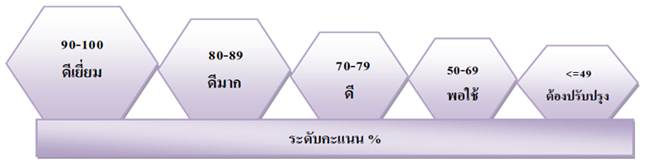
| Board Performance Evaluation | The Board of Directors conducts a self-assessment once a year, in the form of a self-assessment by individual directors and a self-assessment by sub-committees, with evaluation criteria for scoring performance. as follows:
The evaluation process is conducted as follows:
The Nomination and Remuneration Committee processes and compiles various comments to be presented to the Board of Directors' meeting for consideration in reviewing performance and various issues during the year, as well as evaluating the Board's oversight effectiveness. Furthermore, the evaluation results can be used to support and improve the operational efficiency of the management. Summary of the Board of Directors' Self-Assessment by Committee For the Year 2025 Consisting of 9 main topics, with an average evaluation score falling within the level of Excellent is 91%. Details are as follows:
Summary of Self-Assessment of Sub-Committees by Committee for the Year 2025 Consisting of 4 main topics, with an average evaluation score falling within the criteria of Excellent level is 92%. Details are as follows:
| ||||||||||||||||||||||||||||||||||||||||||||||||||||||||||||||||||||||||||||||||||||||||||||||||||||||||||||||||
| Corporate Governance of Subsidiaries and Associated Companies | The company has overseen and supervised the management and operational responsibility of its subsidiaries by appointing qualified and experienced individuals representing the company to serve as directors in the subsidiaries. These appointed directors in the subsidiaries are responsible for acting in the best interest of the subsidiaries. Furthermore, the company stipulates regulations requiring individuals appointed by the company to ensure that subsidiaries have complete and correct regulations regarding connected transactions, the acquisition or disposal of assets, or any other significant transactions of such companies. They must also apply the criteria related to information disclosure and the aforementioned transactions in the same manner as the company's own criteria. Additionally, they must oversee the collection of data and the accounting records of the subsidiaries to enable the company to inspect and compile them for the timely preparation of consolidated financial statements. | ||||||||||||||||||||||||||||||||||||||||||||||||||||||||||||||||||||||||||||||||||||||||||||||||||||||||||||||||
Code of Conduct
Has a Business Code of Conduct
Yes
Code of Conduct Description
The company adheres to good corporate governance principles and an anti-corruption policy, operating with a focus on efficiency and effectiveness, and a commitment to the interests of all stakeholders.
Code of Conduct Practices
| Guideline | Detail |
|---|---|
| Prevention of Misuse of Inside Information | The company has established a policy regarding conflicts of interest based on the principle that any decision made by personnel at all levels in conducting business activities must be solely for the best interests of the company. Such decisions must be made free from the influence of personal, family, or close associate interests, which could affect the determination of what constitutes the company's best interests. Specifically, all personnel must dedicate their full time and utmost ability to the company and should not have any other business interests outside the company that could infringe upon their time or dedication to their responsibilities towards the company and potentially cause damage to the company. Conflicts of interest arise when personnel at all levels have personal interests, or interests of their family or close associates, whether financial or otherwise, in an enterprise that will benefit from 1. The decision of that individual in performing duties for the company, or 2. Awareness of the company's operational activities or future plans. The company considers it the duty of personnel at all levels to avoid financial involvement and/or relationships with other external parties which could result in the company losing benefits, creating conflicts of loyalty or interest, or hindering efficient operations. The company's policy is to protect its legitimate interests while simultaneously limiting the scope of freedom in various activities of personnel at all levels to the minimum necessary. Annual Review of Conflicts of Interest Annually, personnel at all levels will be notified to review and acknowledge the company's conflict of interest policy. Everyone must report any potential conflicts of interest that arise to the Office of the Managing Director, with detailed information regarding the matter attached. This information will be compiled for discussion with the Managing Director before the Office of the Managing Director informs the individual and their supervisor of the company's position. Furthermore, everyone is encouraged to report such matters at any time during the year if they arise. In cases where a concrete conflict of interest exists, the personnel's full disclosure and cooperation with the company when a conflict of interest arises can resolve the issue by that individual recusing themselves from decision-making on matters that are the source of the conflict. In cases of doubt or uncertainty regarding the appropriateness of one's own actions, or if one becomes aware of potential non-compliance with the company's conflict of interest policy by other personnel, everyone should consult with their supervisor, the Human Resources Department, the Office of the Managing Director, or the Internal Audit Office, as appropriate. |
| Anti-corruption | The company recognizes the importance of anti-corruption and is committed to conducting business based on legal principles, ethical standards, good corporate governance, and integrity practices in line with its mission. It adheres to correctness and high ethical standards, as well as responsibility towards society, the environment, and all stakeholders. This is to ensure that the company has policies defining appropriate responsibilities, guidelines, and operational requirements for preventing corruption in all its business activities, and to ensure that business decisions and operations that may carry corruption risks are carefully considered and executed. In the past year, the company has reviewed and updated its anti-corruption policy to ensure its suitability and alignment with current circumstances. which was audited by the Audit Committee and approved by the Board of Directors. This policy covers subsidiaries, joint ventures, other companies over which the company has control, as well as business representatives, partners, and customers involved in the company's business operations, and the company. reaffirms its commitment to "Zero Tolerance for All Forms of Corruption ( Zero Tolerance Policy)” strictly. Guidelines
Operational Requirements For clarity in handling matters with a high risk of corruption, the company requires its personnel to perform their duties with caution and adhere to the company's guidelines on the following matters:
Policy and Guidelines on Complaints/Whistleblowing The company prioritizes good corporate governance, transparency, and accountability to stakeholders, and therefore provides for has “ a policy for receiving complaints and whistleblowing reports Whistleblowing” (Whistleblowing Policy) to serve as a mechanism for preventing, inspecting, and elevating business operational standards in compliance with laws, regulations, and business ethics principles. It aims to ensure that the handling and investigation of reports are systematic, transparent, verifiable, and fair, as well as to build confidence among whistleblowers that the company has appropriate and strict protection measures in place. This is to foster an organizational culture committed to honesty, integrity, and adherence to the criteria of the Stock Exchange of Thailand, including the guidelines of the Thai Private Sector Collective Action Against Corruption (CAC) project. ( CAC). In the past year, the company reviewed its complaint and whistleblowing policy, which was audited by the Audit Committee and approved by the Board of Directors. The company provides opportunities for all groups involved with the company to submit complaints or whistleblowing reports, including directors, executives, employees at all levels of the company and its subsidiaries (including temporary/contract employees), shareholders, business partners, contractors, agents, brokers, customers, consumers, investors, creditors, government agencies, communities around operational areas, as well as general external parties who possess information or evidence beneficial to the company's investigation. by Accepts complaints or whistleblowing reports on issues that may affect the integrity, transparency, safety, and reputation of the organization, covering the following matters:
|
| Whistleblowing and Protection of Whistleblowers | Channels for Complaints/Tip-offs To enable stakeholders to submit complaints/tip-offs conveniently, securely, and confidentially, the company has established reception channels with restricted access rights and designated two primary receiving units: the Audit Committee ( Audit Committee) and Internal Audit Office ( Internal Audit Office) Submissions can be made through the designated channels as follows:
Complainants can submit matters via the online system at www.estarpcl.com/complaint The system will restrict data access rights to only Audit Committee and Internal Audit Office To maintain confidentiality and data security Process for Handling Complaints/Tip-offs When the company receives a complaint or tip-off through the designated channels, to ensure that the investigation is accurate, transparent, fair, and strictly protects the rights of the complainant, the company has established the following operational procedures: 1. Receipt of Complaints When a complaint or tip-off is submitted through the channels designated by the company, whether through the Audit Committee or the Internal Audit Office, it shall be considered an official receipt of the matter. If a matter is sent to other units beyond the two aforementioned designated units, the recipient must forward it to the Audit Committee or the Internal Audit Office as appropriate, immediately or within 2 (two) business days from the date of receipt. The company has limited the number of recipients to a minimum to ensure strict and secure control over data access. 2. Preliminary Fact-Finding The Internal Audit Office and the Human Resources and Administration Department are jointly responsible for initial fact-finding, by verifying the completeness of information, conducting preliminary substantive assessment, and recording the matter in the company's complaint registration system. This investigation will be completed within 7 (seven) business days from the date the company receives complete and sufficient necessary information and supporting documents for preliminary investigation. After initial fact-finding, an opinion must be submitted to the Audit Committee on whether a formal fact-finding investigation should be conducted. In cases where the complaint involves individuals holding positions of Senior Director or higher, or senior executives, or company directors, the Internal Audit Office must immediately forward the matter to the Audit Committee without substantive consideration. 3. Appointment of a Fact-Finding Working Group When the Audit Committee considers that a fact-finding investigation should be conducted, the Audit Committee shall appoint a fact-finding working group consisting of the following personnel: (1) Internal Audit Office, comprising the Internal Audit Department and the Company's Compliance Department (2) Human Resources and Administration Department (3) The highest-ranking supervisor of the accused party In cases where the complaint involves individuals holding positions of Senior Director or higher, or senior executives, or company directors The Audit Committee will oversee all investigations and may consider appointing an investigator or independent auditor, or determine the composition of an additional fact-finding working group as appropriate. The results of such investigations will be forwarded to the Nomination and Remuneration Committee for their opinion and decision before being reported to the Board of Directors for further consideration and action as deemed appropriate. 4. Consideration and Fact-Finding The fact-finding working group will collect information, examine documents, interview relevant individuals, and analyze facts based on available evidence. They must adhere strictly to principles of neutrality, prudence, transparency, and confidentiality. An investigation report must be prepared and submitted to the Audit Committee for consideration, with the aim of completion within 30 (Thirty ) days from the date of appointment for fact-finding, unless in complex cases where the fact-finder may request an extension as necessary, and will inform the complainant of the reasons and the expected completion timeframe. 5. Monitoring and Conclusion The Internal Audit Office will monitor progress and record the operational status until the process is completed, and report to the Audit Committee for acknowledgment. 6. Notification of Results to Complainants After the fact-finding process is completed and the company receives the official investigation report, the company will inform the complainant of the outcome of the consideration or investigation within 7 (seven) business days from the date of receiving the investigation results. The reporting of results will be conducted confidentially and will only disclose necessary information to avoid affecting personal rights or related disciplinary and legal processes. However, if the complainant or whistleblower does not disclose their name or contact information, the company will not be able to inform them of the outcome. Guidelines for Protecting Complainants/Whistleblowers The company has strict guidelines for protecting and safeguarding the rights of complainants, whistleblowers, information providers, and all involved parties, and will maintain the confidentiality of all related information and identities. Disclosure will only occur as necessary for investigation or as required by law. The company prohibits any retaliation, harassment, intimidation, threats, termination, demotion, or any actions that may cause direct or indirect harm to complainants or information providers. In cases where a complainant or whistleblower is affected by such actions, the company will consider appropriate remedial and protective measures, including providing an opportunity for complainants to submit additional complaints directly to the Chairman of the Audit Committee or independent directors if they believe they have not received adequate protection. The company has The results of complaints regarding corruption are reported to the Audit Committee quarterly. In the past year 2025, there were no complaints or tip-offs concerning ethical misconduct or actions inconsistent with corporate governance principles, nor any corruption involving the company, its directors, or employees. The company has maintained measures for policy communication, control over complaint reception channels, and periodic review of channel security, as well as providing advice to employees regarding corruption risks, to prevent and reduce the likelihood of undesirable incidents and to ensure that if a matter is reported, the company can proceed efficiently, transparently, and fairly. |
| Preventing the Misuse of Inside Information | The Board of Directors and designated management are responsible for reporting their securities holdings in accordance with the regulations of the Stock Exchange of Thailand and the Securities and Exchange Commission. The Company must operate with equality and fairness towards all shareholders equally, and to prevent illegal actions by personnel at all levels of the Company and all family members who have received or may receive undisclosed inside information, the Company prohibits all directors, executives, and employees from trading shares or soliciting others to buy, sell, offer to buy, or offer to sell the Company's shares, whether by themselves or through brokers, while possessing undisclosed inside information. The Company and the Stock Exchange of Thailand consider such trading of securities to be for speculative purposes or to create an advantage for any particular group. Prevention measures to ensure smooth policy compliance. The Company has taken the following actions:
Penalties for the use of inside information Violators will be subject to disciplinary and/or legal action, as the case may be. The Company has established a policy prohibiting directors, executives, and employees/staff of the Company who are in positions or departments responsible for or having access to inside information, including their spouses and minor children, from buying or selling the Company's securities during the period of 15 days prior to the disclosure date of the Company's financial statements and important financial information, and during the period of 1 day after the disclosure date of the Company's financial statements and important financial information. Every three months, the Company will inform directors, executives, and employees/staff of the Company who are in positions or departments responsible for or having access to inside information about the prohibited trading period for the Company's securities. |
Promoting Compliance with the Code of Conduct
Promotes Compliance by Directors, Executives and Employees
Yes
Description
Operations and knowledge promotion for employees on anti-corruption.
The company prioritizes enhancing knowledge and understanding and fostering an organizational culture of integrity. It has continuously provided anti-corruption knowledge enhancement for both current executives/employees and new employees, as follows:
The company organized training on the topic of “Roles and Responsibilities of Directors and Employees in Anti-Corruption” on March 5, 2025. held at the company's meeting rooms and/or via electronic conferencing systems, with a total of 85 people. covering relevant executives and employees to foster understanding of their roles, organizational ethical expectations, and practices to be adhered to in preventing and avoiding corruption risks. The company invited a speaker from the Thai Private Sector Collective Action Against Corruption (CAC) project. to become
speakers to convey concepts, standards, and practical examples consistent with good governance principles and accepted practices.
The company organized training for new employees. a total of 2 sessions on July 31, 2025, and October 9, 2025. at the company's meeting rooms and/or via electronic conferencing systems. with a total of 26 people. to ensure new employees are aware of the company's anti-corruption policies and practices and good corporate governance principles from the start of their employment, along with requiring the completion of pre- and post-training tests. to assess understanding and reinforce correct implementation.
Such training and evaluation are part of the company's good corporate governance operations. The company aims for personnel at all levels to be aware, understand their roles and responsibilities, and strictly adhere to the company's policies/measures to prevent corruption and maintain the trust of stakeholders sustainably.
Anti-Corruption Networks & Projects
Joined or Declared Intent to Join Anti-Corruption Networks
Yes
Networks & Projects Joined
| Network / Project | CAC Certified |
|---|---|
| Thai Private Sector Collective Action Against Corruption: CAC | N |
| United Nations Global Compact (UNGC) | |
| Participation of anti-Corruption networks and initiatives |
Material Changes & Developments in CG
Reviewed the CG Policy or Board Charter in the Past Year
Yes
Material Changes or Developments in the Past Year
Yes
Policy Review — Description
The Board of Directors has revised the Board of Directors Charter in accordance with the resolution of the Board of Directors Meeting No. 6/2568, held on November 14, 2568.
Implements the CG Code for Listed Companies
No
CG Code — Description
Summary of the performance of the Board of Directors over the past year. In the year 2025 the Board of Directors reviewed the application of good corporate governance principles in accordance with the company's business context. Overall, the Board of Directors has largely adhered to good corporate governance principles.